Slovenian Christmas
Christmas is one of the most important holidays in Slovenia. Like many Christian holidays, it has roots in pre-Christian traditions connected to the winter solstice, the time of year when the sun begins to rise again and the days slowly grow longer. This moment was understood as the victory of good (light) over evil (darkness). Among the ancient Slavs, the winter solstice marked the birth of Svarožič, the son of the sky god Svarog, who personified the young sun. The Slovenian word for Christmas, božič, can be traced to the expression mali bog (“little god”), reflecting these earlier beliefs. Today, of course, the central meaning of Christmas in Christianity is the celebration of the birth of Jesus Christ.
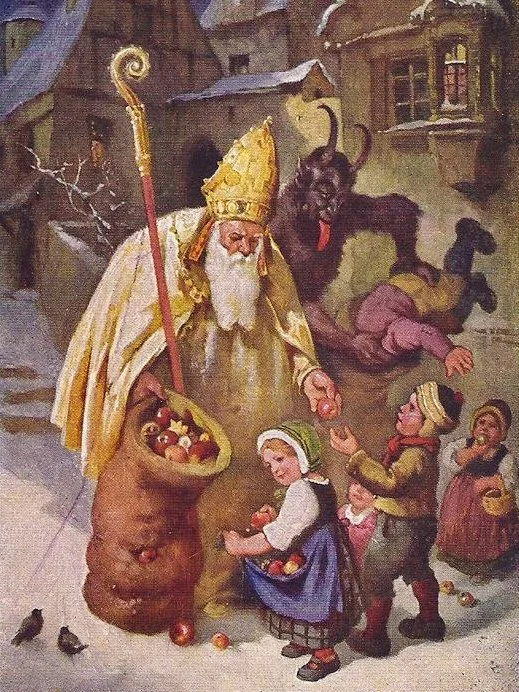
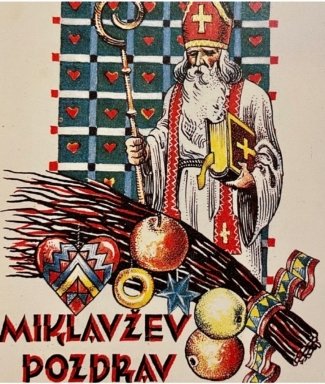
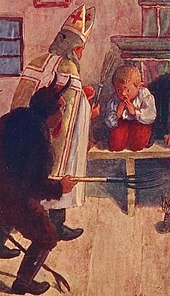
Christians prepare for Christmas throughout December during Advent. Early December is marked by the feast of Saint Nicholas, one of the most popular saints in Slovenia. On the evening of December 5, Saint Nicholas traditionally walks through towns and villages accompanied by his entourage of parkeljni (Krampus). Well-behaved children are rewarded with gifts, while the naughty ones receive bundles of branches or sticks.
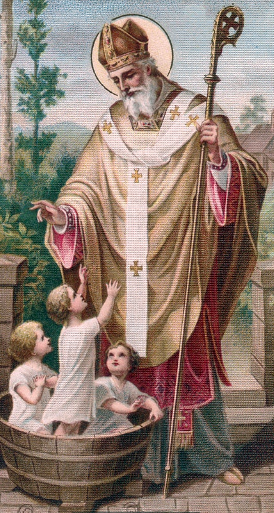
There are very few historically reliable accounts of Saint Nicholas. According to tradition, he was born around the year 280 in Patras, in present-day Greece, into a wealthy family. He later became bishop of Myra, a small Roman town in what is now Turkey, and earned a reputation as a defender of Christian doctrine during the Great Persecution of 303. Much of what we know about him comes from legend. The most famous tells how he saved three young women from prostitution by secretly providing gold for their dowries. Another legend recounts how he resurrected three boys murdered by a butcher, an episode that later led to his association as the patron saint of children. By the 13th century, Saint Nicholas had become widely known as a bringer of gifts.
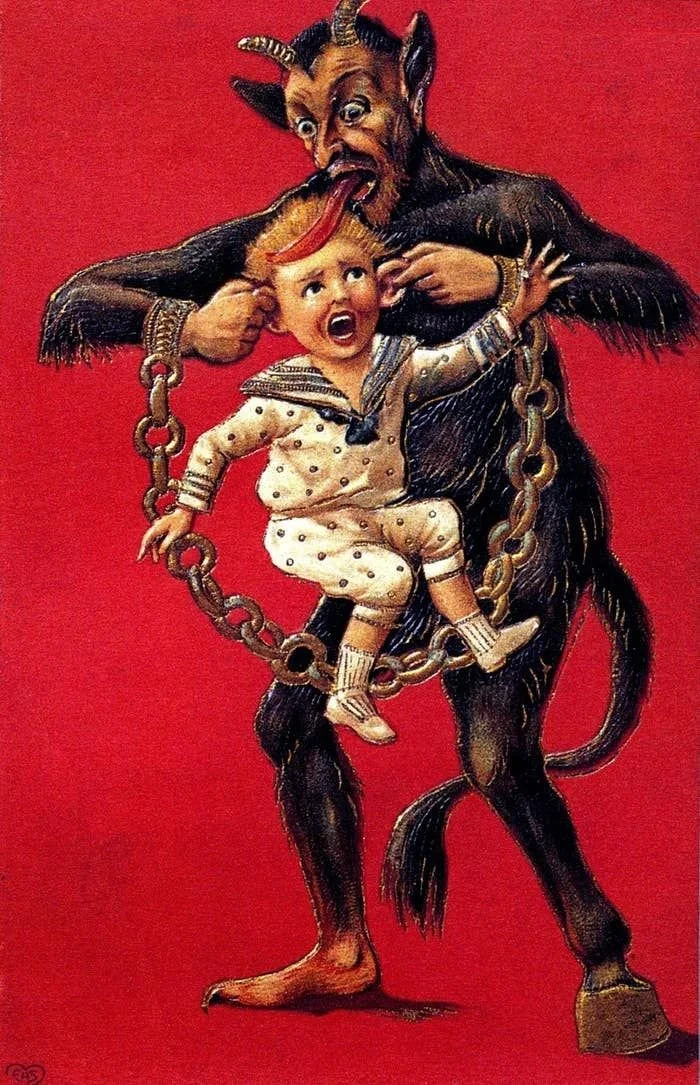
Alongside Saint Nicholas in Alpine regions appears his dark counterpart, Krampus—a mythical creature rooted in folk traditions of the Alps, including parts of Germany, Austria, Slovenia, the Czech lands, and Slovakia. While Saint Nicholas rewards good behavior, Krampus punishes misbehavior, carrying naughty children away in his sack.
The Christmas–New Year period was also closely tied to food traditions. It coincided with koline, the traditional pig slaughter, which is why pork—roasts and other cuts—featured prominently on festive tables. Poultry, especially chickens, roosters, and hens, was considered an inauspicious choice: the pig, which roots forward with its snout, symbolized progress and moving ahead, whereas birds scratch backward with their claws, an unfavorable sign. In that context, it made sense that pork roasts became the standard Christmas dish. Other foods not to be missed around the holidays include potica, the traditional rolled yeast cake with various fillings, and poprtnik, a ceremonial Christmas bread that was kept covered under a tablecloth and shared on Epiphany.