Baked Ricotta and Lemon Crêpes (Gratinirane skutine palačinke)
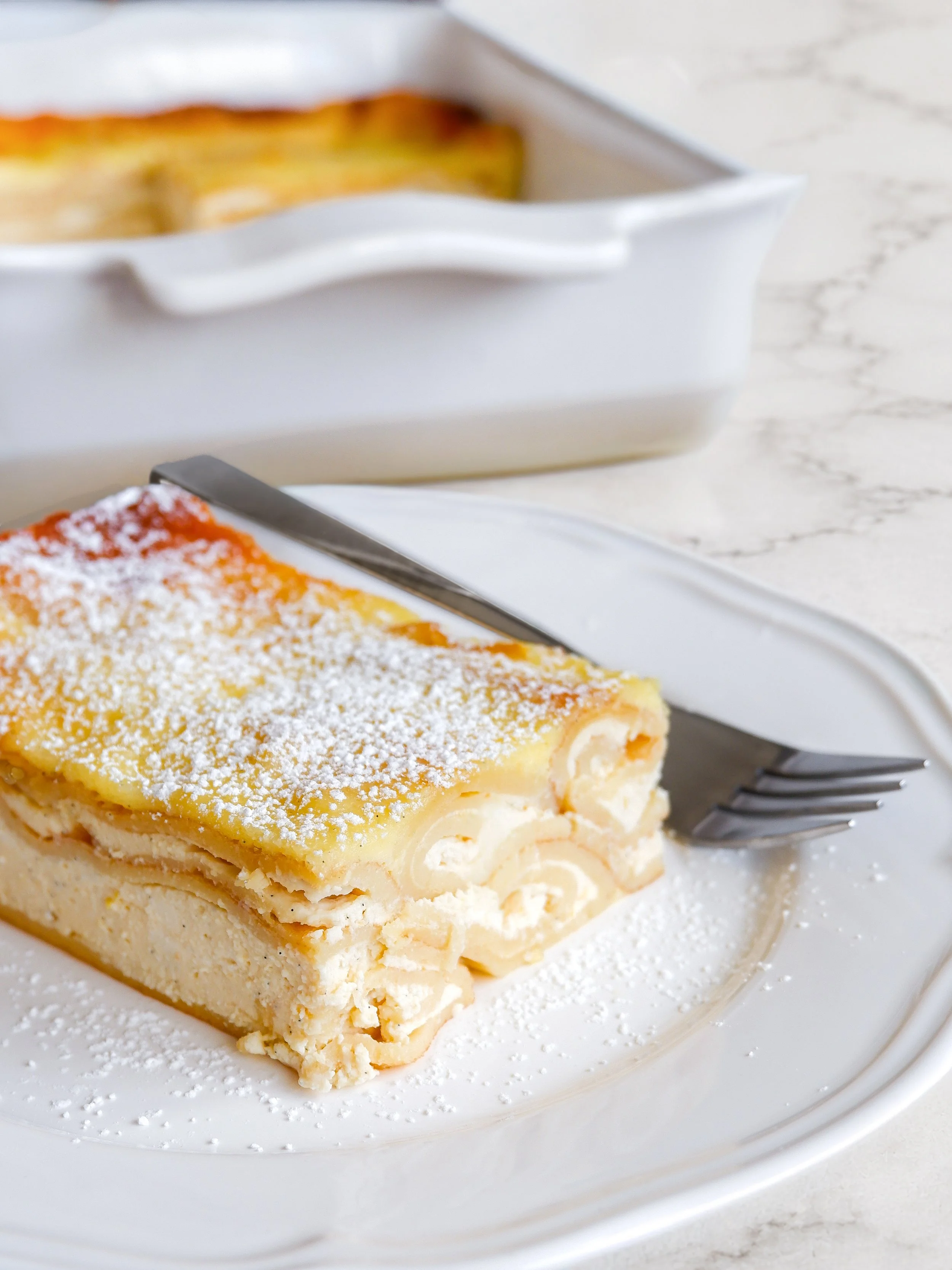
Pancakes go back a long way — roughly 30,000 years, based on analyses of starch grains found on ancient grinding tools. Of course, they must have tasted very different then: Stone Age cooks used flour made from cattails and ferns. Pancakes were even found in the stomach of Ötzi the Iceman, who lived more than 5,000 years ago — a reminder that simple grain cakes were already part of prehistoric diets.
The first written reference to pancakes comes from ancient Greece. Around 500 BC, the comic poet Cratinus wrote the line:
“And a pancake hot and shedding morning dew.”
The context is lost, but he was likely referring to tēganitai (from tēganon, meaning frying pan) — pancakes made of wheat flour, olive oil, and curdled milk, typically served with honey.
Pancakes arrived in Slovenia through neighboring Austria and Hungary. They are usually much thinner than American-style pancakes, which is why I refer to them here as crêpes. In Slovenia, baked crêpes filled with farmer’s cheese are often served as a main course, preceded by soup.
There is also a traditional Ljubljana variation of this recipe. It is similar to the one given here, but raisins and lemon zest are omitted. Instead, one bunch of fresh tarragon (about 20 g) is folded into the filling — a distinctly local and aromatic touch.
Bogataj, Janez. Taste Slovenia. Ljubljana: Rokus Gifts & National Geographic, 2007.
Hot off the Griddle, Here’s the History of Pancakes , National Geographic
Recipe
Ingredients:
Crêpe Batter:
2 eggs
400 ml milk
15 g sugar
1 tbsp oil
250 g flour
50 ml mineral water
pinch of salt
Filling:
750 g farmer's cheese or ricotta
zest of one and a half lemon
60 g sugar
1 egg
25 ml spiced rum
50 g raisins
2 tsp vanilla essence
Topping:
150g sour cream or crème fraîche
50 g heavy cream
zest of half a lemon
15 g sugar
1 egg
1 tsp vanilla essence
Instructions:
Crêpes
Mix all the crêpe ingredients except the mineral water until smooth. Gradually whisk in the mineral water.
Let the batter rest for 30 minutes in the fridge.
Butter a 20 cm skillet and heat over medium heat.
Pour one ladle of batter into the center of the hot and buttered skillet. Lift the pan up and twirl it so the batter stretches as far out as it can go.
Once the bottom side is set (after about 1-2 minutes), turn the crêpe around and cook on the other side for about 30 seconds.
Transfer the cooked crêpe to a warmed up plate and repeat with the remaining batter.
Filling and Topping
Soak 50 g of raisins in 100 ml of rum for at least 10 minutes (the longer, the better).
Mix the rest of the filling ingredients.
For the topping, mix all the ingredients.
Preparing crêpes for baking
Butter a rectangular 35x24 cm baking pan and preheat the oven to 180°C (355°F).
Add a few tablespoons of filling to the center of each crêpe, spread it, sprinkle with raisins and then roll up the crêpe. Put the crêpe into a baking pan.
Pour the topping over the crêpes.
Bake for 45 minutes, until the topping is set and lightly golden. Let rest briefly before slicing. Serve sprinkled with vanilla sugar.